The Next Competitive Advantage in Fuel Distribution

Joel Davies
VP of Marketing
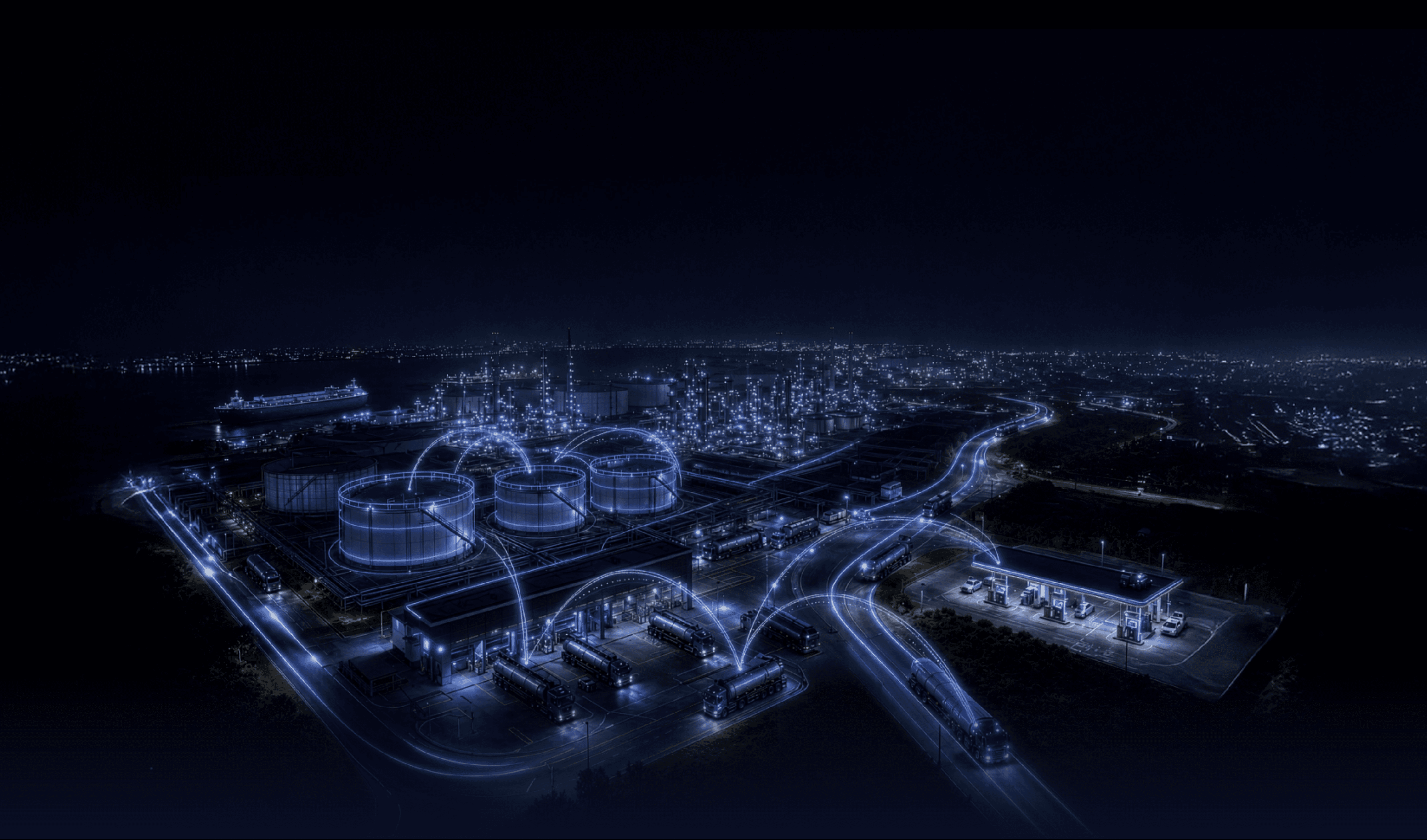
Table of contents
Share
The Structural Shift
Every industry eventually reaches a point where the strategy that created its success begins to limit its future. I believe fuel distribution is approaching that point.
For most of the last thirty years, competitive advantage in fuel distribution came from optimizing individual functions. Companies that negotiated better supply contracts outperformed their competitors. Strong pricing strategies protected margin more effectively. Better dispatchers squeezed more productivity from every truck. Routing software reduced miles and improved utilization. Every wave of operational improvement created meaningful value, and the companies that embraced those improvements generally outperformed those that didn't.
Today, nearly every fuel wholesaler has better technology, more data, and greater operational visibility than at any point in our industry's history. Pricing teams have access to more market intelligence than ever before. Dispatchers can see every truck in real time. Supply teams evaluate more sourcing options, accounting closes faster, and customer service representatives have greater visibility into operations. By almost every traditional measure, today's fuel wholesaler is more sophisticated than it was a decade ago.
Yet ask most executives whether the business has become easier to manage, and the answer is usually the opposite. Despite better systems and better information, operations have become more demanding, customer expectations continue to rise, and the number of variables that must be considered throughout the day seems to grow every year.
The obvious explanation is that external forces have made the business more difficult. Markets are more volatile. Driver shortages continue to pressure operations. Regulations evolve. Customers expect tighter delivery windows, better communication, and faster service. Those challenges are certainly real, but I don't believe they're the fundamental reason the business feels harder to operate.
The bigger change is structural.
When Success Changes the Business
One of the great ironies of our industry is that technology didn't create today's complexity.
Success did.
As wholesalers expanded into new markets, added products, diversified service offerings, opened additional terminals, and built larger customer portfolios, they created businesses capable of far more than they were a generation ago. Every one of those decisions created opportunity. Collectively, they also changed the architecture of the business itself.
Operational decisions that once remained inside a single department now create consequences across the organization.
A pricing decision no longer belongs exclusively to the pricing department. It influences supply strategy, transportation costs, dispatch priorities, inventory positions, and customer service. Likewise, a delayed transport load may affect tank wagon schedules, billing, customer commitments, and tomorrow's purchasing decisions. What were once independent operational choices have become deeply interconnected business decisions.
The business no longer behaves as a collection of independent departments. It behaves as a connected system.
That's an important shift because most organizations are still designed as if it doesn't. We organize around departments, measure performance by function, and implement software to improve individual workflows. None of those decisions are wrong, they reflect the way competitive advantage was built for decades. The challenge is that the business itself has evolved faster than the organizational model supporting it.
One way to think about it is this: a business built from great departments is like a body with exceptional organs but a weak nervous system. The heart is healthy. The lungs are healthy. Every individual organ performs exactly as it should. But if information cannot move quickly between them, the body struggles to respond as a single organism. Fuel distribution increasingly faces the same challenge. Most organizations have exceptional individual functions, but the connections between those functions often determine how well the business performs.
The Limits of Functional Optimization
For decades, the industry's instinctive response to a new challenge was to improve the function experiencing the pain. Dispatch became more difficult, so we invested in better dispatch software. Pricing became more complex, so we improved pricing tools. Supply planning evolved, so we invested in better forecasting and procurement capabilities.
Those investments produced tremendous returns because they addressed the primary constraint at the time.
Today, I'm not convinced the primary constraint lives inside any single department.
Most organizations still optimize pricing independently, supply independently, dispatch independently, and manage customer service independently because that's how competitive advantage was historically created. Every team is making good decisions with the information available to them. The challenge is that no single team sees the complete operational picture.
As W. Edwards Deming famously observed, "A bad system will beat a good person every time." This isn't a talent problem. It's an operating model problem.
Every Delivery Is More Than a Delivery
Consider something as routine as a tank wagon delivery. On paper, it appears to be a routing exercise. A truck leaves the yard, makes a few deliveries, and returns for its next turn.
Anyone who has managed tank wagon operations knows that's only the visible part of the process. Before the truck ever leaves the bulk plant, dozens of interconnected business decisions have already been made. Should this customer be delivered today, or can the order wait until tomorrow? Is the market moving up or down? How should the truck be loaded so the compartment mix supports the entire day's deliveries? Is there enough product in the bulk plant, or do we need to replenish inventory first? Can we fit another profitable stop into the shift without jeopardizing service levels? Should we preserve a retain for a high-priority customer later in the day? By the time the truck rolls out of the gate, the success of the entire shift has already been shaped by dozens of commercial, operational, and customer service decisions.
None of those decisions belong exclusively to dispatch. They're pricing decisions. Supply decisions. Inventory decisions. Customer service decisions. Driver utilization decisions. Dispatch simply sits at the intersection of all of them.
The same pattern appears across transport, fleet fueling, and virtually every other commercial delivery model. As organizations expand, the challenge isn't moving trucks efficiently. It's understanding how one decision changes outcomes everywhere else.
A Different Kind of Competitive Advantage
Every industry eventually reaches a point where improvements inside individual functions begin producing smaller returns. Manufacturing experienced this shift as supply chains became integrated. Retail experienced it as merchandising, inventory, and logistics became connected. Healthcare is experiencing it today as clinical and operational systems become increasingly unified.
I believe fuel distribution is approaching that same inflection point.
That doesn't mean dispatch stops mattering. Or pricing. Or supply. Those disciplines remain essential. What changes is where the next step change in performance comes from. Increasingly, it comes from helping those functions work together.
The organizations that outperform over the next decade won't necessarily have the best dispatch software, the most sophisticated pricing engine, or the lowest transportation costs viewed independently. They'll have operating models that allow information to move naturally across the business so that every decision is made with broader operational context.
It's no longer about making one department smarter. It's about making the entire organization smarter.
The Next Operating Model
I don't believe the future belongs to organizations that replace experienced operators with technology. Quite the opposite.
The organizations pulling ahead are improving human judgment, not eliminating it. Instead of asking pricing, supply, dispatch, and customer service to solve problems independently, they're creating operating models where information moves naturally across the business. Rather than manually reconciling dozens of competing priorities across disconnected systems, experienced operators can make decisions with a more complete understanding of the operational tradeoffs surrounding them.
People remain at the center of the operation. What changes is the quality of the information supporting their decisions.
For decades, fuel wholesalers won by building exceptional departments. That strategy created extraordinary companies and continues to deserve enormous credit. The next generation of industry leaders won't abandon that foundation. They'll build on it.
The next competitive advantage won't come from optimizing one function better than everyone else. It will come from connecting the decisions that already exist across the business. Organizations that recognize that shift early won't simply operate more efficiently. They'll build businesses that are fundamentally more adaptive, more resilient, and ultimately more difficult to compete against.
Every industry eventually reaches a point where the strategy that created its success begins to limit its future. I believe fuel distribution is reaching that point today.
The organizations that recognize that shift first won't abandon the strategies that made them successful. They'll build on them by creating businesses where the connections between departments become just as important as the departments themselves.
And I believe that's where the next generation of competitive advantage will be found.